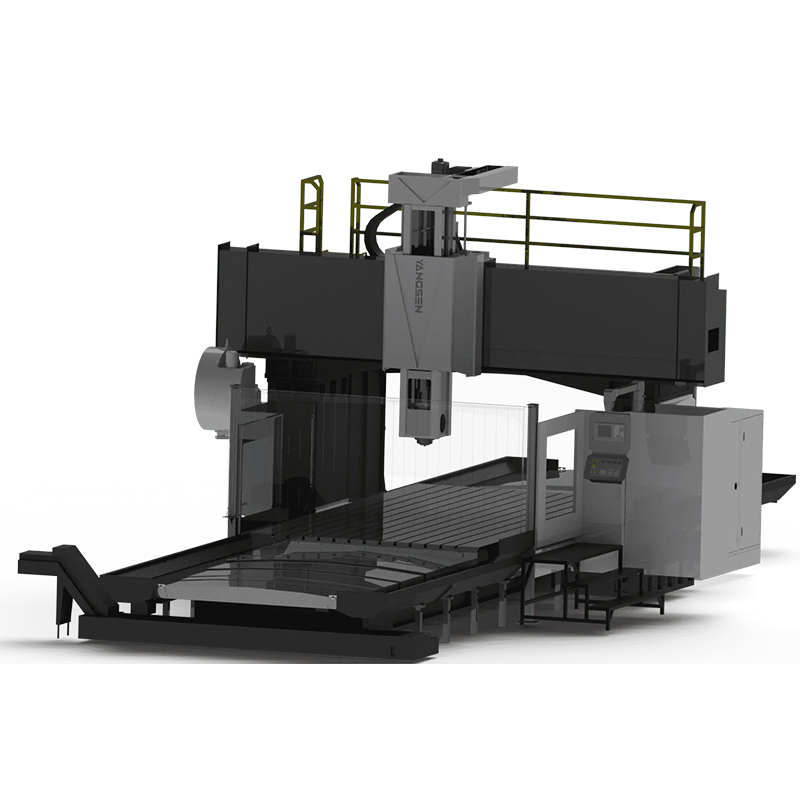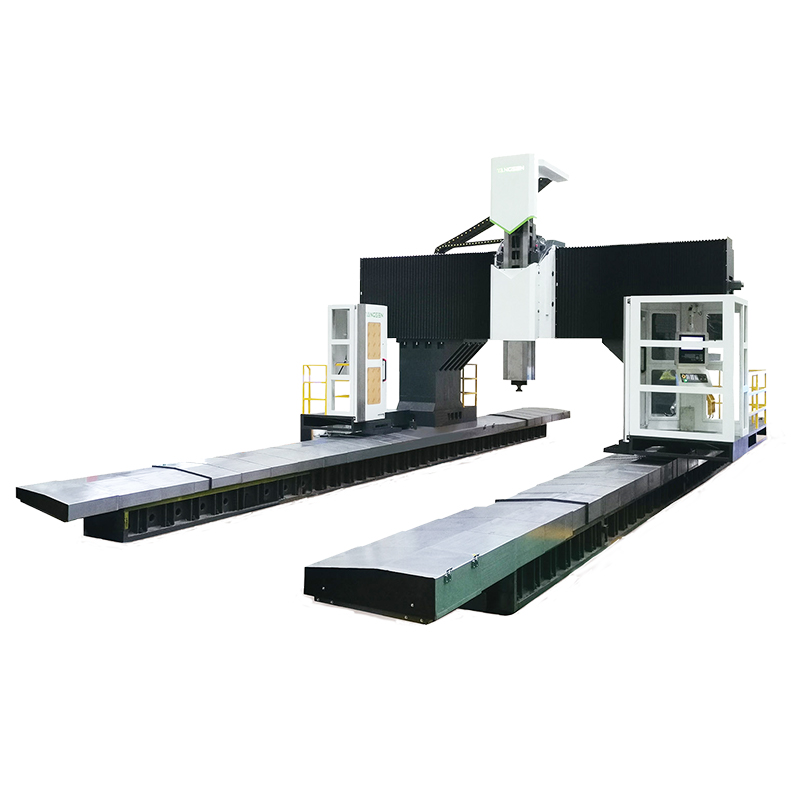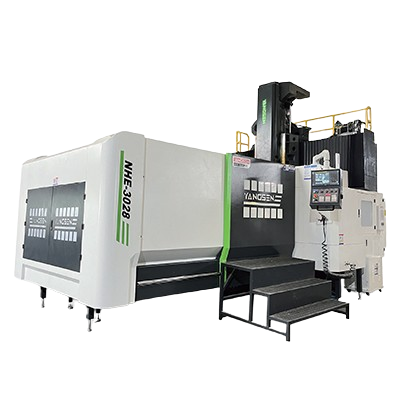
Les machines à portique fixe et à portique mobile sont deux des conceptions structurelles les plus courantes dans les systèmes d'usinage CNC. Conçues pour offrir une grande précision d'usinage, elles diffèrent cependant considérablement en termes de structure, de manutention des pièces, de rigidité et de capacité de production. Dans une machine à portique fixe, le portique reste immobile tandis que la table de travail se déplace pendant l'usinage.
Dans une machine à portique mobile, la table de travail reste fixe tandis que le portique se déplace dans la zone d'usinage. Ces différences structurelles influent sur la précision d'usinage, la capacité de traitement des matériaux, l'encombrement de la machine, la productivité et son adéquation globale à l'application. Comprendre ces différences permet aux fabricants de choisir la solution CNC la plus adaptée à leurs besoins de production.
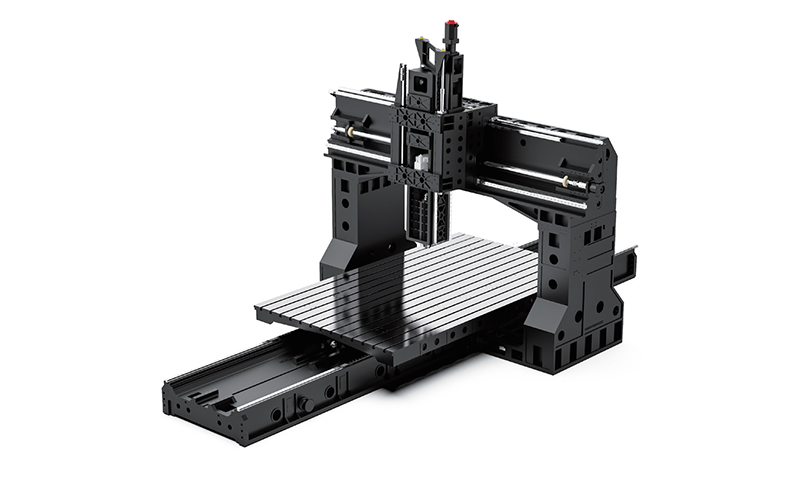
Une machine CNC à portique fixe est dotée d'une structure de portique immobile, le pont restant en position fixe pendant les opérations d'usinage. Dans cette configuration, la table de travail se déplace sous le portique tandis que la broche effectue des opérations de coupe selon plusieurs axes.
Contrairement aux systèmes à portique mobile, la pièce à usiner se déplace le long du banc de la machine pendant l'usinage. Cette conception minimise les mouvements de la structure supérieure de la machine et permet à l'ensemble broche de conserver une plus grande stabilité lors des opérations de coupe intensives. Les machines CNC à portique fixe sont couramment utilisées dans les industries exigeant une grande rigidité, des tolérances serrées et un état de surface supérieur.
Les machines CNC à portique fixe sont disponibles en différentes configurations pour répondre à divers besoins d'usinage. Le choix d'un modèle particulier dépend de facteurs tels que la taille de la pièce, le type de matériau, le volume de production et la précision d'usinage requise.
Portique fixe à une seule colonne
Les machines à portique fixe à une seule colonne sont conçues pour les applications d'usinage légères et les petites pièces. Ces machines offrent généralement un encombrement réduit tout en conservant une bonne rigidité et une grande précision. Elles sont souvent utilisées dans les ateliers et les sites de production qui traitent des composants de taille moyenne et qui recherchent des solutions d'usinage économiques.
Portique fixe à double colonne
Machines à portique à double colonne Ces machines figurent parmi les configurations les plus courantes dans la fabrication industrielle. Leur structure à double colonne assure un support optimal au portique fixe, améliorant considérablement la rigidité et la stabilité de la machine. Elles sont idéales pour les opérations d'usinage intensives, les moules de grande taille et les applications de découpe de métaux de précision.
Portique fixe à grande vitesse
Les machines CNC à portique fixe haute vitesse sont spécialement conçues pour les applications exigeant des cycles d'usinage rapides sans compromettre la précision. Ces machines intègrent des systèmes servo avancés, des ensembles de broches légers et des technologies de contrôle de mouvement optimisées pour une productivité accrue tout en conservant une excellente précision.
Portique fixe robuste
Les machines à portique fixe robustes sont conçues pour l'usinage de matériaux volumineux et difficiles à usiner, tels que l'acier, la fonte et les alliages industriels. Leurs châssis renforcés et leurs puissants systèmes de broches leur permettent de supporter des conditions de coupe difficiles tout en garantissant une stabilité et une fiabilité à long terme.
La structure d'une machine CNC à portique fixe est conçue pour une rigidité élevée et des performances d'usinage stables. Dans cette conception, le portique reste fixé sur le bâti de la machine tandis que la table de travail se déplace pendant l'usinage, garantissant ainsi une découpe contrôlée et précise.
Le bâti de la machine est généralement en fonte ou en acier soudé, ce qui lui confère une excellente résistance aux vibrations et une grande stabilité. Le portique fixe est solidement fixé de part et d'autre du banc, réduisant ainsi les mouvements structurels et améliorant la précision d'usinage. La table de travail se déplace sur des glissières de précision à commande servo-motorisée pour un positionnement fluide et précis. Les systèmes modernes intègrent également des commandes numériques (CNC) et des broches performantes pour une efficacité accrue.
Voici quelques raisons pour lesquelles nous avons opté pour un portique fixe :
Avantages du portique fixe | Inconvénients du portique fixe |
Excellente rigidité structurelle et résistance aux vibrations | Capacité limitée à manipuler des pièces de très grande taille |
Précision d'usinage supérieure et tolérances plus serrées | L'espace au sol requis est plus important en raison du déplacement de la table. |
Idéal pour la découpe intensive et l'usinage de matériaux durs | Moins flexible pour le traitement des feuilles extra-longues |
Amélioration de la qualité de la finition de surface et de la régularité de coupe | Les mouvements importants de la table peuvent créer une inertie supplémentaire. |
Durée de vie des outils prolongée grâce à des conditions de coupe stables | La taille des machines peut augmenter considérablement pour les grandes surfaces de travail. |
Usure structurelle réduite sur les composants du portique | En général, des exigences d'espace d'installation plus élevées |
Performances fiables à long terme en milieu industriel | Peut ne pas être aussi efficace que les systèmes à portique mobile pour la production grand format |
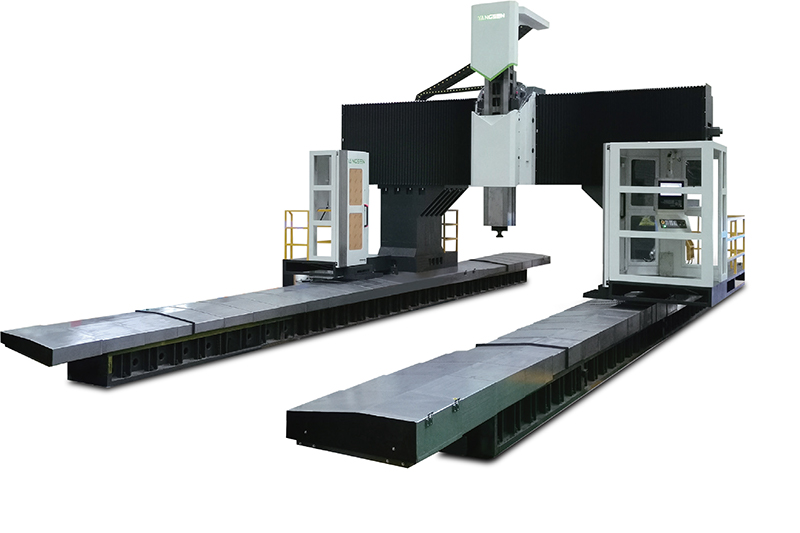
Une machine CNC à portique mobile est un système d'usinage dans lequel le portique se déplace au-dessus d'une table de travail fixe pendant l'usinage, tandis que la pièce reste immobile. Cette conception est largement utilisée dans les industries exigeant l'usinage de grands formats et une manutention flexible des matériaux. Contrairement aux systèmes à portique fixe, le mouvement structurel est concentré sur le portique lui-même, ce qui permet à la machine de couvrir une zone d'usinage plus large sans nécessiter de déplacement de la table. De ce fait, les machines à portique mobile sont particulièrement adaptées au traitement efficace et stable de tôles de grande taille, de panneaux longs et de composants industriels volumineux.
Machines CNC à portique mobile Disponibles en plusieurs configurations selon les exigences de production et l'échelle d'usinage, chaque type est conçu pour optimiser la vitesse, la rigidité et la flexibilité de l'espace de travail.
Portique mobile léger
Les systèmes légers sont utilisés pour les petites tâches de production telles que le travail du bois, la signalétique et la fabrication légère. Ils offrent une exécution rapide et un bon rapport coût-efficacité pour les applications d'usinage non lourdes.
Portique de déplacement industriel
Les portiques mobiles industriels sont conçus pour les environnements de production en continu. Ils sont dotés de châssis renforcés, de glissières améliorées et d'une capacité de charge supérieure, ce qui les rend adaptés au traitement des métaux, à la fabrication de pièces aérospatiales et de matériaux composites.
Portique mobile à grande vitesse
Ces machines sont conçues pour des cycles de production rapides. Elles utilisent des systèmes servo avancés et un contrôle de mouvement optimisé pour atteindre des vitesses de coupe élevées tout en maintenant une précision acceptable pour la fabrication à grande échelle.
Portique mobile extra-large
Les configurations extra-larges sont utilisées pour les matériaux de grande taille tels que les composants de construction navale, les grands panneaux d'aluminium et les pièces de structure. Ces machines offrent des courses étendues et des options de conception hautement modulables.
La structure d'une machine CNC à portique mobile est conçue pour optimiser la flexibilité de la zone de travail et l'efficacité de la manutention des matériaux. Dans ce système, la table de travail reste parfaitement fixe, tandis que le portique se déplace le long de l'axe X pour réaliser les opérations d'usinage.
Le bâti de la machine offre une base stable qui supporte sans jeu les pièces lourdes et de grandes dimensions. Le portique, monté sur des guidages linéaires de précision, se déplace avec fluidité dans la zone d'usinage et supporte la broche pour les opérations de coupe. Ceci réduit la nécessité de déplacer des matériaux volumineux pendant l'usinage, améliorant ainsi l'efficacité de la manutention.
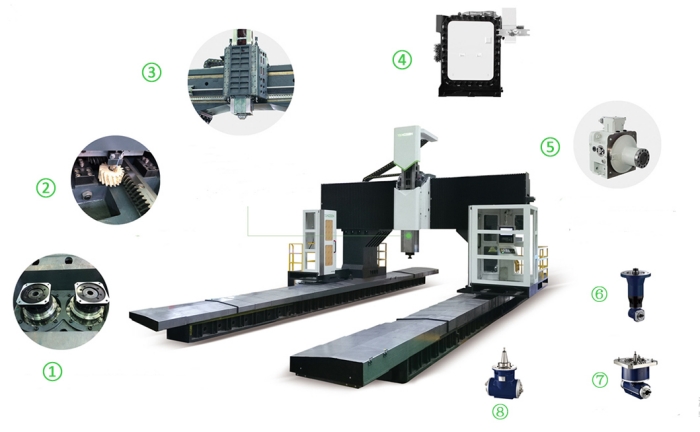
Les machines CNC à portique mobile sont largement privilégiées dans les industries qui usinent des pièces de grande taille et recherchent une production flexible. Voici les principales raisons de choisir un portique mobile.
Avantages du portique mobile | Inconvénients du portique mobile |
Idéal pour les pièces de grande taille et surdimensionnées | Rigidité légèrement inférieure à celle du portique fixe |
Chargement facile des matériaux grâce à la table fixe | Les vibrations peuvent augmenter lors de coupes importantes. |
Une meilleure efficacité de l'espace dans de nombreuses configurations d'usines | Stabilité réduite à très haute vitesse d'usinage |
Productivité élevée pour la production à grande échelle | Nécessite un entretien plus fréquent des composants mobiles |
Adapté aux flux de travail industriels continus | Légères limitations dans les applications de très haute précision |
Adaptable à de nombreux secteurs et matériaux | Les performances de coupe peuvent varier sous des conditions de charge élevée. |
Conception évolutive pour répondre aux besoins d'usinage de très grande envergure | Pas toujours idéal pour l'usinage de très hautes tolérances. |
Les machines CNC à portique fixe et à portique mobile diffèrent sur plusieurs points importants, notamment leur structure, leurs performances, leur coût et leurs exigences de maintenance. Ces différences influent directement sur le comportement de chaque machine dans les applications industrielles réelles et aident les fabricants à choisir le système le mieux adapté à leurs besoins de production.
Les machines CNC à portique fixe sont conçues avec une structure de pont immobile : le portique reste fixe tandis que la table de travail se déplace pendant l’usinage. Cette conception offre une grande rigidité et une excellente stabilité. À l’inverse, les machines CNC à portique mobile utilisent une table de travail fixe tandis que le portique se déplace dans la zone d’usinage. Cela permet une meilleure manipulation des grandes tôles et des pièces surdimensionnées.
Les systèmes à portique fixe sont plus adaptés aux opérations d'usinage de précision, aux pièces de petite et moyenne taille et aux applications de coupe intensive. Ils sont largement utilisés dans les industries exigeant des tolérances serrées, telles que la fabrication de moules et l'aérospatiale.
Les machines à portique mobile sont mieux adaptées à la production à grande échelle, aux matériaux de grandes dimensions et au traitement continu de tôles. Elles sont couramment utilisées dans les industries du travail du bois, de la signalétique et de la fabrication de grandes pièces métalliques.
Les machines CNC à portique fixe sont généralement plus coûteuses en raison de leur construction et de leur conception axée sur la rigidité, notamment pour les modèles robustes. Cependant, elles offrent un excellent rapport qualité-prix sur le long terme pour les industries de précision.
Les machines CNC à portique mobile peuvent être plus rentables pour l'usinage de grands formats car elles sont conçues pour l'évolutivité et une production à haut rendement, réduisant ainsi le coût unitaire dans les environnements de production de masse.
Les machines à portique fixe nécessitent généralement une installation de fondation plus complexe en raison de leur socle lourd et de leur système de table mobile. Leur installation requiert une mise à niveau et une planification de l'espace adéquates.
Dans les grands ateliers, les machines à portique mobile sont souvent plus faciles à assembler car la table est fixe et le système de déplacement du portique est modulaire et évolutif.
Aspect | CNC à portique fixe | Portique mobile CNC |
Fréquence de maintenance | Plus bas, en raison du nombre réduit de pièces mobiles du portique | Plus haut, car le portique se déplace pendant le fonctionnement |
Usure mécanique | Usure réduite de la structure du portique | Usure accrue des systèmes de guidage et d'entraînement |
Besoins en lubrification | exigences modérées et stables | Une lubrification plus fréquente est nécessaire |
Complexité du service | Maintenance plus facile et plus prévisible | routine d'entretien légèrement plus complexe |
Risque d'indisponibilité | Temps d'arrêt réduit en cas d'utilisation prolongée | Risque accru de pannes de maintenance programmées |
Durabilité à long terme | Très élevée grâce à sa structure stable | Élevé, mais dépend d'un entretien régulier |
Remplacement des pièces | Remplacement des composants moins fréquent | Remplacement plus fréquent des pièces d'usure |
Le choix entre une machine CNC à portique fixe et une machine CNC à portique mobile dépend de vos objectifs de production, du type de matériau, des exigences de précision et de votre planification commerciale à long terme. Chaque facteur joue un rôle important dans le choix de la machine la plus adaptée à votre application.
Le premier facteur, et le plus important, est le type d'application. Si votre travail implique un usinage de haute précision, comme la fabrication de moules, de pièces aérospatiales ou de composants métalliques lourds, une machine CNC à portique fixe est plus adaptée. Elle offre une précision et une stabilité supérieures.
Si votre application est axée sur la production à grande échelle, comme le travail du bois, le mobilier, la signalétique ou le traitement de grandes feuilles, une CNC à portique mobile est le meilleur choix en raison de sa capacité à traiter efficacement des matériaux surdimensionnés.
La compatibilité désigne l'aptitude d'une machine à traiter différents matériaux et environnements de production. Les machines à portique fixe sont particulièrement adaptées aux métaux durs, aux pièces de précision et aux industries exigeant des tolérances serrées. Elles offrent des performances optimales dans des environnements contrôlés et de haute précision.
Les machines à portique mobile sont plus compatibles avec les grands panneaux, les matériaux souples, les composites et les flux de production de masse où la flexibilité dimensionnelle est importante.
Différents types de machines répondent à différents besoins industriels. Les machines à portique fixe existent en versions robustes, à grande vitesse et de haute précision, ce qui les rend idéales pour les tâches d'usinage exigeantes.
Les machines à portique mobile sont généralement conçues en modèles à cadre ouvert, grand format ou évolutifs, permettant aux fabricants de personnaliser la taille et la capacité de production en fonction des besoins.
Le prix est un autre critère important lors du choix d'une machine CNC. Les machines à portique fixe sont généralement plus chères en raison de leur structure rigide et de leurs composants de haute précision. Cependant, elles offrent un excellent rapport qualité-prix sur le long terme dans les industries de précision.
Les machines à portique mobile peuvent s'avérer plus rentables pour les environnements de production de grande envergure, car elles sont conçues pour un débit plus élevé et des zones de travail plus vastes.
Votre budget disponible doit correspondre à vos objectifs de production. Si votre priorité est l'ultra-précision et la fiabilité industrielle à long terme, investir dans un système à portique fixe est plus avantageux.
Si vous disposez d'un budget limité mais avez besoin d'un usinage grand format et d'une productivité élevée, une machine CNC à portique mobile offre un meilleur rapport qualité-prix et une plus grande évolutivité.
La maintenance est un facteur déterminant dans la prise de décision. Les portiques fixes nécessitent généralement moins d'entretien grâce à leur structure stationnaire, ce qui réduit l'usure mécanique. Il en résulte des temps d'arrêt réduits et des performances stables à long terme, améliorant ainsi le retour sur investissement dans les industries de précision.
Les machines à portique mobile nécessitent une maintenance plus régulière en raison du déplacement des composants du portique et des glissières. Cependant, elles offrent une capacité de production supérieure, ce qui peut générer un retour sur investissement plus rapide dans les environnements de production à grand volume.
Lors de la planification d'investissements à long terme, tenez compte non seulement des coûts de maintenance, mais aussi de la productivité, de la durée de vie de la machine et de l'efficacité de production attendue afin de déterminer le meilleur retour sur investissement pour votre entreprise.
Quelle est la principale différence entre les machines CNC à portique fixe et celles à portique mobile ?
La principale différence réside dans la structure du mouvement. Dans les machines à portique fixe, le portique reste immobile tandis que la table de travail se déplace, tandis que dans les machines à portique mobile, la table de travail reste fixe et le portique se déplace au-dessus d'elle.
Quelle machine CNC offre la meilleure précision ?
Les machines CNC à portique fixe offrent généralement une précision supérieure grâce à leur structure rigide et à la réduction des vibrations pendant l'usinage.
Quelle machine est la plus adaptée aux grandes pièces ?
Les machines CNC à portique mobile sont plus adaptées aux pièces de grande taille et surdimensionnées car elles peuvent traiter des matériaux plus larges et plus longs sans limitations majeures.
Quel type de CNC est le plus rentable ?
Cela dépend de l'application. Les machines à portique fixe sont plus rentables pour les travaux de précision, tandis que les machines à portique mobile offrent un meilleur rapport qualité-prix pour la production à grande échelle.
Quelle machine nécessite le plus d'entretien ?
Les machines CNC à portique mobile nécessitent généralement plus d'entretien car elles comportent davantage de composants mobiles, tels que les entraînements de portique et les glissières.
Quelle machine est la plus avantageuse pour un investissement à long terme ?
Les deux constituent de bons investissements à long terme, mais le choix dépend de l'utilisation. Un portique fixe est préférable pour les industries de précision, tandis qu'un portique mobile est plus adapté à la production en grande série.
Les machines CNC à portique fixe et à portique mobile jouent toutes deux un rôle important dans la fabrication industrielle moderne, mais leur adéquation dépend entièrement des exigences de l'application. Les machines CNC à portique fixe sont surtout connues pour leur grande rigidité, leur précision supérieure et leurs excellentes performances dans les tâches d'usinage exigeantes et de haute précision.
En revanche, les machines CNC à portique mobile excellent dans l'usinage de grandes pièces, offrant une flexibilité, une évolutivité et une productivité accrues pour les matériaux surdimensionnés. Le choix de la machine CNC adaptée dépend de facteurs tels que la taille de la pièce, la précision requise, la vitesse de production et l'espace disponible. Comprendre ces différences permet aux fabricants d'optimiser leurs investissements et d'améliorer l'efficacité globale de leur usinage.
Si vous envisagez d'investir dans une solution CNC fiable, choisissez la machine adaptée à votre flux de production et à vos besoins de croissance futurs. CNC Yangsen propose des systèmes CNC de pointe conçus pour offrir performance, précision et une valeur industrielle durable, répondant ainsi à tous vos besoins de fabrication.