L'usinage à commande numérique (CNC) est un procédé de fabrication qui utilise des machines pilotées par ordinateur pour enlever de la matière d'une pièce avec une grande précision. Aujourd'hui, c'est l'une des méthodes de production les plus répandues car elle garantit une qualité constante, des tolérances serrées et une production plus rapide.
Cependant, l'usinage CNC ne se résume pas à un seul procédé. Différentes opérations d'usinage sont conçues pour différents matériaux, géométries de pièces, exigences de précision et volumes de production. Choisir le bon procédé permet d'améliorer l'efficacité de l'usinage et la qualité des pièces. Dans cet article, vous découvrirez ce qu'est l'usinage CNC, pourquoi il existe différents procédés d'usinage CNC et les types les plus couramment utilisés dans les industries manufacturières modernes.
L'usinage CNC est un procédé de fabrication soustractif qui enlève de la matière d'une pièce solide à l'aide de machines-outils à commande numérique. Contrairement à l'usinage manuel, où les opérateurs contrôlent la machine à la main, les machines CNC suivent des instructions programmées pour effectuer automatiquement les opérations de coupe.
Cela permet aux fabricants de produire des pièces avec une grande précision, une excellente répétabilité et une qualité constante. L'usinage CNC est largement utilisé car il améliore la productivité, réduit les erreurs humaines et permet d'usiner une vaste gamme de matériaux, notamment les métaux, les plastiques et les composites.
L'usinage CNC comprend plusieurs procédés, chacun conçu pour répondre à des exigences de fabrication spécifiques. Le choix d'une méthode d'usinage dépend de facteurs tels que la conception de la pièce, le type de matériau, la précision requise et les besoins de production. Certains procédés servent à créer des formes complexes, tandis que d'autres sont axés sur la réalisation de trous précis, l'amélioration de l'état de surface ou la fabrication de composants cylindriques. Les procédés d'usinage CNC les plus courants sont le fraisage, le tournage, le perçage et l'alésage.
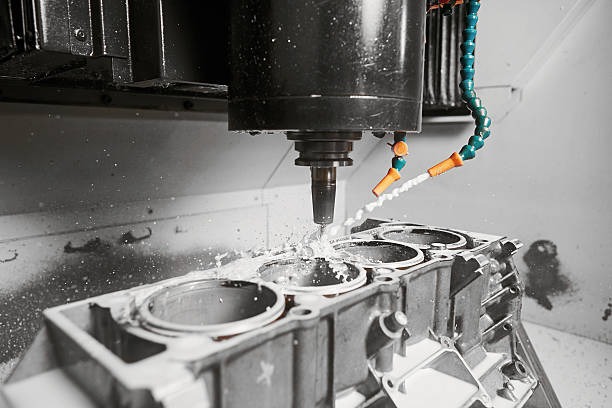
Le fraisage CNC est l'une des techniques les plus utilisées. procédés d'usinage CNCElle utilise des outils de coupe rotatifs à plusieurs points pour enlever de la matière d'une pièce stationnaire, créant ainsi la forme et les caractéristiques requises.
Lors du fraisage, l'outil de coupe se déplace le long de différents axes tout en enlevant de la matière de la pièce. fraiseuses CNC peuvent effectuer des opérations telles que le fraisage en bout, le rainurage, le fraisage de poches et le contournage, ce qui les rend adaptées à la production de géométries complexes.
Avantages du fraisage CNC :
Le fraisage CNC est couramment utilisé pour la fabrication de composants aérospatiaux, de pièces automobiles, de moules, de carters de machines, de supports et de composants mécaniques de précision.
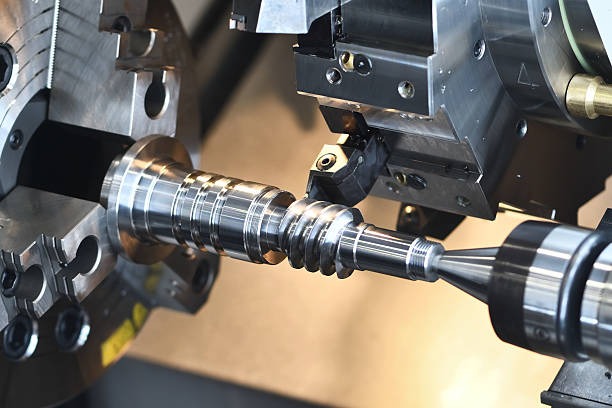
Le tournage CNC est un procédé d'usinage où la pièce tourne tandis qu'un bras reste immobile. outil de coupe Elle enlève de la matière de sa surface. Elle est principalement utilisée pour produire des composants cylindriques et ronds de haute précision.
L'outil de coupe se déplace le long de la pièce en rotation pour enlever la matière excédentaire jusqu'à l'obtention de la forme et des dimensions souhaitées. Les tours à commande numérique peuvent réaliser des opérations telles que le dressage, le filetage, le rainurage et l'alésage.
Avantages du tournage CNC :
Le tournage CNC est largement utilisé dans des secteurs tels que l'automobile, l'aérospatiale, les équipements médicaux et la fabrication de machines en général.
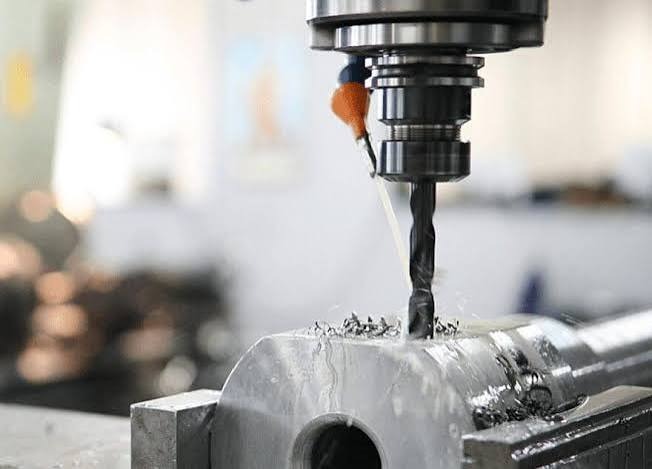
Le perçage CNC est un procédé d'usinage permettant de créer des trous précis dans une pièce à l'aide de forets à commande numérique. La machine contrôle la position, la profondeur et la vitesse de perçage pour obtenir des résultats précis.
Selon l'application, le perçage CNC permet de créer différents types de trous, notamment des trous traversants, des trous borgnes, des trous taraudés et des trous profonds. machines de perçage CNC peut également effectuer des opérations de forage inclinées.
Types courants d'opérations de perçage CNC :
Le perçage CNC est largement utilisé dans les secteurs de l'aérospatiale, de l'automobile, de l'électronique, de la construction et de la fabrication, où des trous précis sont nécessaires à l'assemblage et au bon fonctionnement des composants.
L'alésage CNC est un procédé d'usinage permettant d'agrandir et d'améliorer la précision des trous existants, obtenus par perçage ou moulage. Il utilise un outil de coupe à un seul point pour enlever de petites quantités de matière de la surface intérieure du trou.
L'alésage a pour principal objectif d'obtenir des dimensions précises, un meilleur alignement, une circularité accrue et des surfaces internes plus lisses. L'alésage CNC est particulièrement utile lorsque des tolérances serrées sont requises.
Avantages de l'alésage CNC :
L'alésage CNC est couramment utilisé pour la fabrication de cylindres de moteurs, de paliers, de composants hydrauliques, de carters d'engrenages et d'autres pièces mécaniques de précision.
La rectification CNC est un procédé d'usinage de précision qui utilise une meule abrasive pour enlever de petites quantités de matière d'une pièce. Elle est principalement utilisée comme opération de finition pour obtenir des surfaces extrêmement lisses et des dimensions précises.
Lors du processus de rectification, la meule abrasive rotative enlève progressivement de la matière tandis que le système CNC contrôle le mouvement et le positionnement. Ceci permet aux fabricants d'atteindre des tolérances serrées, difficiles à obtenir avec les méthodes d'usinage conventionnelles.
Avantages de la rectification CNC :
La rectification CNC est largement utilisée dans les secteurs de l'aérospatiale, de l'automobile, du médical, de l'outillage et de la fabrication de précision. Elle est notamment employée pour la fabrication de roulements, d'arbres, de moules, d'outils de coupe et d'autres composants exigeant une grande précision.
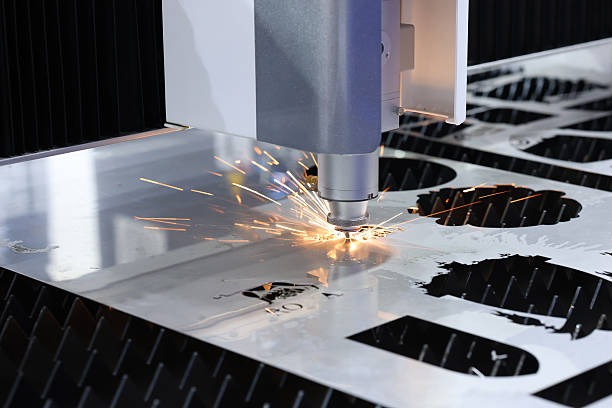
La découpe laser CNC est un procédé d'usinage thermique qui utilise un faisceau laser de haute puissance pour découper, graver ou marquer des matériaux avec une grande précision. Durant le processus, le faisceau laser focalisé génère une chaleur intense qui fait fondre ou vaporise le matériau le long d'une trajectoire de découpe programmée. Le système CNC contrôle le mouvement du laser pour produire des formes et des motifs précis.
Avantages de la découpe laser CNC :
La découpe laser CNC est largement utilisée dans des secteurs tels que l'automobile, l'électronique, l'aérospatiale, la signalétique et la fabrication de tôles.
La découpe plasma CNC est un procédé de découpe thermique qui utilise un arc plasma à haute température pour découper des matériaux conducteurs. L'arc plasma fait fondre le matériau tandis qu'un jet de gaz à grande vitesse évacue le métal en fusion de la zone de découpe. Ce procédé est principalement utilisé pour la découpe de tôles et de plaques métalliques épaisses nécessitant une vitesse et une efficacité de découpe élevées.
Avantages de la découpe plasma CNC :
La découpe plasma CNC est couramment utilisée dans les industries de fabrication lourde, notamment dans la construction, la construction navale, la fabrication automobile et la production d'acier de construction.
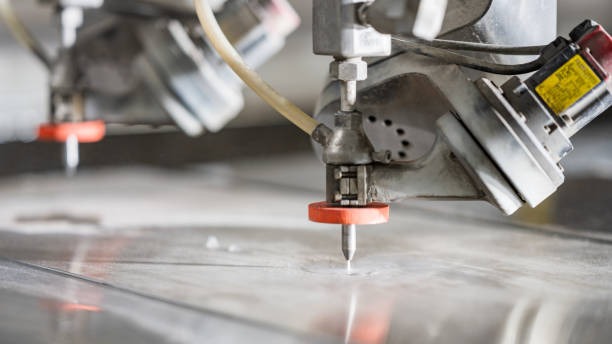
La découpe au jet d'eau CNC est un procédé de découpe à froid qui utilise un jet d'eau à haute pression, souvent mélangé à des particules abrasives, pour découper différents matériaux. Contrairement aux méthodes de découpe thermique, elle ne génère pas de chaleur pendant la découpe. Il n'y a pas de zone affectée thermiquement ; la découpe au jet d'eau est idéale pour les matériaux sensibles aux hautes températures.
Avantages de la découpe au jet d'eau CNC :
La découpe au jet d'eau CNC est couramment utilisée dans les secteurs de l'aérospatiale, de l'automobile, de la construction, du traitement de la pierre et de la fabrication de matériaux composites.
Le fraisage et le tournage CNC sont deux des procédés d'usinage les plus courants dans la fabrication moderne. Bien que tous deux utilisent des machines à commande numérique pour enlever de la matière, leur fonctionnement diffère et ils conviennent à des types de composants différents.
Fonctionnalité | Fraisage CNC | Tournage CNC |
Principe de fonctionnement | Les outils de coupe rotatifs enlèvent de la matière d'une pièce stationnaire | Une pièce en rotation est coupée par un outil stationnaire |
Idéal pour | Formes complexes, fentes, poches et surfaces planes | Pièces cylindriques et composants rotatifs |
Mouvement d'outils | L'outil de coupe se déplace le long de plusieurs axes | L'outil de coupe se déplace linéairement le long de la partie rotative |
Pièces communes | Boîtiers, supports, moules, composants aérospatiaux | Arbres, boulons, bagues, goupilles, pièces filetées |
Précision | Haute précision pour les géométries complexes | Haute précision pour les composants cylindriques |
Type de machine | Machines de fraisage CNC et centres d'usinage | Tours et centres de tournage CNC |
Le choix du procédé d'usinage CNC approprié dépend de plusieurs facteurs, notamment le matériau, la conception de la pièce, les exigences de précision, les besoins de production et le budget. Un procédé adapté permet aux fabricants d'améliorer la qualité, l'efficacité et la maîtrise des coûts.
Le type de matériau usiné joue un rôle important dans le choix du procédé. Les matériaux tendres comme l'aluminium et les plastiques peuvent souvent être usinés par fraisage et tournage classiques, tandis que les matériaux plus durs comme le titane, l'acier trempé et les alliages techniques peuvent nécessiter des procédés spécialisés tels que l'électroérosion ou la rectification.
La forme et la complexité de la pièce déterminent la méthode d'usinage la plus appropriée. Le tournage CNC est idéal pour les pièces cylindriques, tandis que le fraisage CNC est plus adapté aux pièces présentant des caractéristiques complexes, des cavités et des formes irrégulières. Des procédés comme l'électroérosion et la découpe laser sont utiles pour les conceptions complexes et les détails fins.
Les exigences en matière de précision varient selon les applications. Pour les pièces à tolérances serrées, on privilégiera des procédés tels que la rectification CNC, l'électroérosion ou le fraisage de précision. Le choix d'un procédé capable d'atteindre la précision requise contribue à prévenir les défauts et à réduire les opérations de finition.
Les exigences en matière de finition de surface influencent également le choix de l'usinage. Certains procédés produisent naturellement des surfaces plus lisses, tandis que d'autres peuvent nécessiter des opérations de finition secondaires. La rectification, le rodage et le polissage sont couramment utilisés lorsque des finitions extrêmement lisses sont requises.
Le volume de production influence le choix du processus CNC. La production en grande série bénéficie souvent de l'automatisation. centres de tournage CNCLes fraiseuses et les systèmes d'usinage axés sur la production sont généralement privilégiés. Pour les prototypes ou les pièces en petite série, des méthodes d'usinage flexibles peuvent s'avérer plus appropriées.
Les coûts à prendre en compte incluent le temps machine, l'outillage, les pertes de matériaux, la main-d'œuvre et les exigences de finition. Le procédé d'usinage CNC le plus adapté n'est pas toujours le moins cher au départ ; il doit offrir un juste équilibre entre efficacité de production, qualité et coût global de fabrication.
Les procédés d'usinage CNC se divisent en deux grandes catégories : l'usinage conventionnel et l'usinage non conventionnel. La principale différence réside dans la méthode d'enlèvement de matière de la pièce, comme indiqué ci-dessous.
Fonctionnalité | Usinage CNC conventionnel | Usinage CNC non traditionnel |
Méthode d'enlèvement de matière | Utilise des outils de coupe mécaniques | Utilise l'énergie électrique, thermique, chimique ou abrasive |
Outil Contact | Contact direct entre l'outil et la pièce à usiner | Peut ne pas impliquer de contact physique direct |
Processus communs | Fraisage, tournage, perçage, rectification | Découpe par électroérosion (EDM), découpe laser, découpe au jet d'eau, ECM |
Matériaux appropriés | Métaux, plastiques, composites et matériaux en général | Alliages durs et matériaux difficiles à usiner |
Précision | Haute précision pour les applications standard | Extrêmement précis pour les fonctionnalités complexes |
Applications | Pièces générales de fabrication et de production | Aérospatiale, médical, fabrication de moules et composants spécialisés |
1. Quel est le procédé d'usinage CNC le plus courant ?
Le fraisage et le tournage CNC sont considérés comme les procédés d'usinage CNC les plus courants. Le fraisage est largement utilisé pour les formes et les détails complexes, tandis que le tournage est principalement utilisé pour les pièces cylindriques.
2. Fraisage CNC vs tournage : lequel est le meilleur ?
Aucun des deux procédés n'est universellement supérieur. Le fraisage CNC est idéal pour les géométries complexes, les surfaces planes et les poches, tandis que le tournage CNC est plus adapté aux pièces rondes et cylindriques.
3. Quel procédé d'usinage CNC est le plus précis ?
La précision d'un processus CNC dépend du type de machine, du matériau, de l'outillage et de l'application. Des procédés tels que la rectification CNC et l'électroérosion sont couramment utilisés lorsque des tolérances extrêmement serrées sont requises.
4. Une machine CNC peut-elle effectuer plusieurs opérations ?
Oui. Les centres d'usinage CNC de pointe peuvent réaliser plusieurs opérations, notamment le fraisage, le perçage, l'alésage et le taraudage, en une seule configuration. Cela réduit le temps de réglage et améliore l'efficacité.
5. Quels matériaux les machines CNC peuvent-elles usiner ?
Les machines CNC peuvent traiter une large gamme de matériaux, notamment l'aluminium, l'acier, l'acier inoxydable, le titane, le laiton, les plastiques, les composites et d'autres matériaux techniques.
6. L'usinage CNC est-il adapté aux petites séries de production ?
Oui. L'usinage CNC convient aux prototypes, aux petites séries et à la production en grande série. Sa flexibilité permet aux fabricants de produire aussi bien des composants unitaires que des pièces en grande quantité.
L'usinage CNC englobe un large éventail de procédés, chacun étant conçu pour répondre à des problématiques de fabrication spécifiques. Du fraisage au tournage, en passant par l'électroérosion, la découpe laser et l'usinage au jet d'eau, chaque procédé offre des avantages uniques en fonction du matériau, de la conception de la pièce, de la précision requise, de l'état de surface et des exigences de production.
À YangsenNous proposons des solutions d'usinage CNC de pointe, conçues pour répondre aux exigences des différents secteurs industriels. Que vous ayez besoin de composants de haute précision, de géométries complexes ou d'un support de production fiable, notre équipe vous accompagne dans le choix de la solution d'usinage la mieux adaptée à votre application. Contactez Yangsen dès aujourd'hui pour discuter de vos besoins en usinage CNC et trouver la meilleure solution pour votre projet
MOTS CLÉS :