Les machines CNC sont des maillons indispensables de la chaîne de production et permettent d'automatiser avec une grande précision la découpe, le façonnage, le perçage et la finition de divers composants. Quel que soit le secteur d'activité – aérospatiale, automobile, moulisme ou fabrication générale – le choix de la machine CNC adaptée aura un impact direct sur la productivité globale, la précision et les coûts d'exploitation.
Choisir entre différentes options types de machines CNC Le choix d'une machine CNC peut s'avérer complexe. Chaque machine remplit des fonctions bien distinctes, travaille avec des matériaux différents et s'adapte à des environnements de production très variés. Ce guide présente les cinq principaux types de machines CNC, leur fonctionnement, leurs avantages et inconvénients, et vous aide à choisir la machine la mieux adaptée à votre activité.
Le choix de votre machine CNC doit reposer sur une analyse approfondie de vos besoins de production. Chaque machine est conçue pour des tâches, des matériaux et des charges de travail spécifiques.
• Type de matériau : Déterminez si vous usinez principalement des métaux, des plastiques, des composites ou des matériaux mixtes. Certaines machines sont plus performantes que d'autres pour la découpe de métaux lourds.
• Complexité de la pièce : Si vos pièces présentent des géométries complexes, un usinage multifaces ou des tolérances très serrées, vous aurez probablement besoin d'une commande d'axes avancée.
• Volume de production : L'automatisation et les cycles de production rapides sont avantageux pour la production à grand volume, tandis que la flexibilité favorise la production à faible volume et les travaux sur mesure.
• Exigences de précision : Certains secteurs, comme l'aérospatiale et la fabrication de dispositifs médicaux, exigent une précision au micron près et des structures de machines stables.
• Espace et agencement du magasin : Les machines de grande taille, comme les portiques ou les centres d'usinage à 5 axes, nécessiteront davantage d'espace au sol et une planification plus poussée des fondations.
• Budget et coûts d'exploitation : ILe coût initial, les frais d'outillage, la maintenance et la consommation d'énergie doivent tous s'inscrire dans le budget.
Plusieurs types de machines CNC sont utilisés dans fabrication industrielleChacune est conçue pour des tâches d'usinage spécifiques et vise des objectifs de production précis. Voici une description détaillée des cinq types de machines CNC les plus courants.
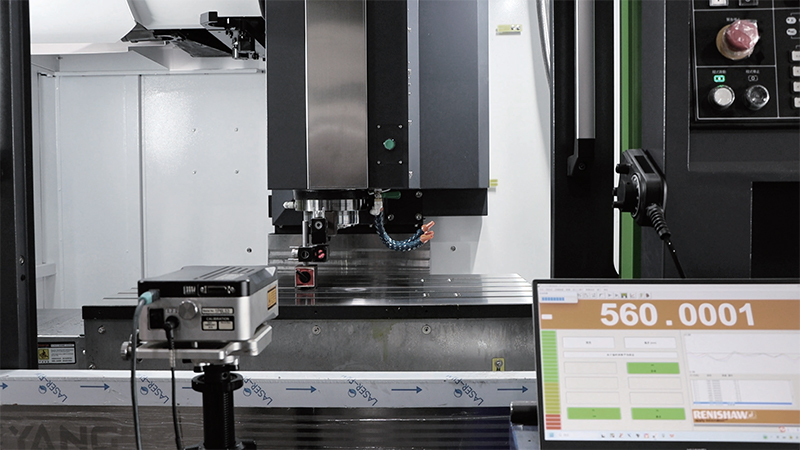
On enlève de la matière de la surface de la pièce à l'aide d'un outil de coupe rotatif tout en maintenant la pièce immobile sur un fraiseuse CNC.
Les opérations de fraisage comprennent tout, de fraisage en bout, rainurage, perçage et contournage.
Sa facilité d'utilisation et sa précision supérieure ont fait de la fraiseuse l'un des outils d'usinage les plus prisés en production.
• Avantages :Haute précision et répétabilité, large gamme de matériaux autorisés, formes complexes et caractéristiques détaillées.
• Inconvénients :Seules les pièces cylindriques, un peu plus lentes pour la production en très grand volume, et les tâches complexes sont difficiles à programmer.
• Idéal pour :Si vous fabriquez des pièces prismatiques, des moules, des dispositifs de fixation ou tout composant nécessitant un usinage de précision et des tolérances serrées, alors une fraiseuse CNC est ce qu'il vous faut.

Un tour CNC fait tourner la pièce à usiner contre un outil de coupe stationnaire pour réaliser l'opération de coupe.
Cette configuration est idéale pour les pièces rondes et symétriques telles que arbres, bagues et composants vissés.
Les tours CNC sont équipés d'outils motorisés supplémentaires, qui peuvent effectuer certaines opérations de fraisage limitées tout en conservant la même configuration du tour CNC.
•Avantages : Idéal pour les pièces cylindriques, offrant une bonne cadence de production, une finition de surface homogène et une méthode efficace d'enlèvement de matière.
•Inconvénients : Des contraintes géométriques fondamentales créent un environnement peu favorable à la fabrication de pièces prismatiques complexes. La configuration de l'outillage elle-même peut parfois constituer un obstacle.
•Idéal pour : Vous devriez opter pour un tour CNC si votre production concerne principalement des composants ronds, des arbres, des usinages en grande série, etc.
Sur un tour CNC, la pièce est mise en rotation tandis qu'un outil de coupe stationnaire balaie le bord du matériau, enlevant ainsi une partie de la pièce.
Les travaux de fabrication typiques utilisant des tours CNC comprennent ceux-ci impliquant un tour, des pièces symétriques telles que des arbres, des bagues et des composants filetés.
Les tours CNC modernes sont aujourd'hui programmés pour la plupart avec des outils motorisés, ce qui se limite à la possibilité d'effectuer certaines opérations de fraisage pendant l'usinage sur le tour.
•Avantages : Idéal pour les pièces cylindriques, production très rapide, finition de surface reproductible et très efficace pour l'enlèvement de matière.
•Inconvénients : Flexibilité géométrique limitée ; impossible de réaliser des pièces prismatiques complexes. La mise en place de l’outillage peut également s’avérer contraignante.
•Idéal pour : Choisissez un tour CNC pour la production de pièces rondes, d'arbres ou pour des travaux de tournage à très haut rendement.

A machine à 5 axes incorpore trois axes linéaires et deux axes de rotation pour rendre la machine plus polyvalente.
Le composant le plus complexe peut être usiné à différents angles sans repositionner la pièce.
Elle trouve de nombreuses applications dans les domaines aérospatial, médical et de l'ingénierie de précision.
•Avantages : Précision optimale pour les pièces complexes, moins de réglages et de dispositifs de fixation, avec une très bonne finition de surface.
•Inconvénients : Prix élevé et coûts de maintenance importants ; programmation complexe nécessitant des opérateurs qualifiés.
•Idéal pour : Vous devriez finalement opter pour une machine CNC 5 axes pour la fabrication de pièces complexes et de haute précision, car la précision et l'efficacité sont primordiales.
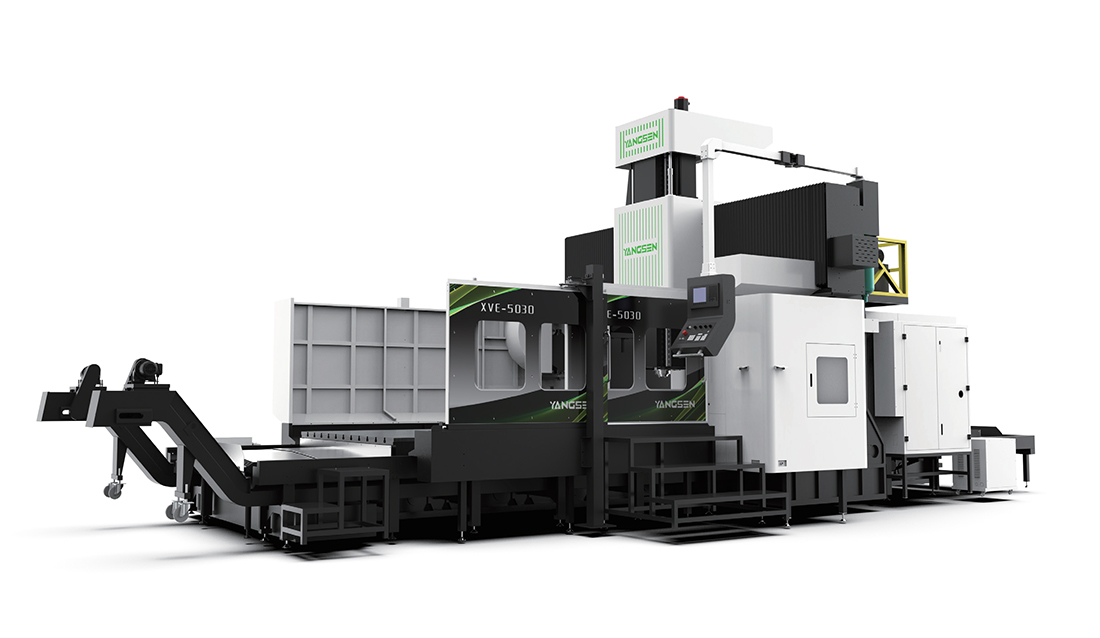
A machine à portique CNC présente unedisposition du pont, oùLa broche se déplace au-dessus d'une pièce à usiner immobile.
Il offre une bonne rigidité et est privilégié pour les composants volumineux ou lourds.
Les machines à portique sont couramment utilisées dans les secteurs de l'aérospatiale, de la construction navale et… fabrication d'équipement lourd.
•Avantages : Permet de manipuler des pièces volumineuses et lourdes, possède très stabilité structurelle élevée, améliore la précision sur les grandes surfaces et supporte des forces de coupe très élevées.
•Inconvénients :Nécessite beaucoup d'espace au sol, a un coût d'installation élevé et requiert des temps de mise en place plus longs.
•Idéal pour : Si vous travaillez avec des composants surdimensionnés ou si vous avez besoin d'un usinage stable sur des surfaces extrêmement grandes, optez pour une machine à portique CNC.
Le choix de la machine CNC la plus adaptée dépend de vos objectifs de production, du type de matériau et de votre budget. Il n'existe pas de solution unique convenant à tous les fabricants. Comprendre le comportement de chaque machine dans différentes conditions vous permettra d'aligner votre investissement sur vos besoins opérationnels réels.
Critères | Fraiseuse | Tour CNC | Centre d'usinage | CNC 5 axes | Portique CNC |
Forme de la pièce | Prismatique | Cylindrique | Parties complexes | Géométrie complexe | Composants de grande taille |
Niveau de précision | Haut | Haut | Très élevé | Extrêmement élevé | Haut |
Automation | Moyen | Moyen | Haut | Haut | Moyen |
Flexibilité de configuration | Bien | Limité | Excellent | Excellent | Modéré |
Besoins en espace | Modéré | Modéré | Modéré | Haut | Très élevé |
Gamme de prix | Moyen | Moyen | Haut | Très élevé | Haut |
Fraiseuse CNC: Idéal pour les petits et moyens ateliers produisant des pièces variées aux designs changeants.
Tour CNC : Idéal pour la production en série de composants ronds ou symétriques par les fabricants.
Centre d'usinage CNC : Idéal pour les usines qui ont besoin de rapidité, d'automatisation des tâches et d'une production constante pour diverses opérations.
Machine CNC 5 axes : Idéalement adapté aux industries aérospatiales, médicales et de précision pour la fabrication de composants complexes.
Machine à portique CNC : Conçu pour les travaux intensifs et la production à grande échelle nécessitant une rigidité élevée.
Investir dans une machine CNC, c'est opter pour la durabilité, aussi importante que la performance. À long terme, la machine sera plus rentable grâce à la réduction des temps d'arrêt permise par la longévité des pièces et la précision des mesures.
La durée de vie prévue des différents types de machines CNC varie en fonction de leur structure, de leur charge de travail et de leurs conditions d'utilisation.
Type de machine CNC | Durée de vie prévue | Caractéristiques de durabilité | Impact de la maintenance |
Fraiseuse CNC | 10 à 15 ans | Châssis rigide, charges de coupe modérées | Maintenance de routine de la broche et du guidage |
Tour CNC | 12 à 18 ans | Charges rotatives équilibrées, trajectoires de mouvement simples. | Alignement des outils et entretien des roulements |
Centre d'usinage CNC | 15 à 20 ans | Environnement fermé contrôlé | La maintenance préventive est essentielle |
Machine CNC 5 axes | 12 à 18 ans | Cinématique complexe, composants de haute précision | Nécessite un étalonnage par un expert |
Machine à portique CNC | Plus de 20 ans | Structure robuste, rigidité à grande échelle. | entretien des fondations et des voies ferrées |
Plusieurs facteurs influencent directement la durée de vie et la fiabilité de votre machine CNC.
• Construction de machines: Les châssis en fonte et en acier soudé résistent très bien aux vibrations et à l'usure due aux chocs.
• Chargement pendant le fonctionnement: La découpe intensive et continue est le pire ennemi des composants.
• Entretien: Un graissage et une inspection réguliers peuvent prolonger la durée de vie de n'importe quel outil.
• Facteurs environnementaux: La poussière, l'humidité et les variations de température sont des facteurs d'usure.
• Connaissances de l'opérateur: Un bon opérateur minimisera les contraintes mécaniques inutiles.
• Calibrage logiciel: Un mauvais étalonnage endommage la machine de l'axe, provoquant une panne.
Les machines fonctionnant dans les limites de leur conception auront une durée de vie considérablement plus longue tout en conservant leur précision.
L'installation d'une machine CNC n'est pas avant tout une décision technique ; elle a des implications directes en termes d'efficacité, de coût, de qualité et de croissance.
Disposer de la machine adéquate, spécifiquement adaptée à la tâche, augmente le flux de production global et améliore les délais de livraison en permettant de travailler à vitesse maximale avec un temps d'arrêt minimal.
Des machines stables, avec un contrôle précis des axes, produisent des pièces de qualité constante ; des tolérances plus strictes sont respectées et de meilleures finitions de surface sont possibles.
Des machines plus efficaces entraînent une usure moindre des outils, une réduction des rebuts et des retouches, car elles génèrent elles-mêmes des économies régulières au fil des ans.
La machine adéquate permettrait de fabriquer de nombreuses pièces de conceptions différentes sans nécessiter beaucoup de temps pour les changements d'outillage.
Les machines CNC modernes comportent des zones fermées et des systèmes automatisés afin de minimiser les risques pour les humains liés aux opérateurs.
Fournir un rendement fiable avec une garantie de qualité constante contribue à bâtir des relations solides avec la clientèle.
Les raisons évoquées ci-dessus pourraient amener de nombreux acheteurs à réfléchir aux approches possibles concernant les applications de lecture erronée des types courants.
1. Une machine CNC plus chère est-elle toujours meilleure ?
Mythe: Les machines plus chères seront toujours plus performantes.
Réalité: Une machine est la mieux adaptée à une application, et ce n'est pas forcément la plus chère.
2. Avez-vous toujours besoin d'une machine CNC à 5 axes ?
Mythe: Tout travail exigeant de la précision nécessite une machine à 5 axes.
Réalité:Plusieurs pièces peuvent être produites facilement sur des machines à 3 ou 4 axes.
3. Les tours CNC sont-ils uniquement destinés aux pièces simples ?
Mythe:Les tours CNC sont inflexibles.
Réalité:Les tours CNC modernes équipés d'outils motorisés peuvent effectuer des opérations complexes.
4. Les machines plus grandes offrent-elles toujours une meilleure précision ?
Mythe:Les machines plus grandes sont plus précises que les petites.
Réalité:La précision de toutes les machines dépend de leur conception, de leur étalonnage et d'un entretien approprié.
5. L'automatisation supprime-t-elle le besoin d'opérateurs qualifiés ?
Mythe:Les machines CNC pourraient fonctionner plus ou moins de manière autonome.
Réalité: Des opérateurs qualifiés doivent toujours être impliqués dans les tâches de programmation et de configuration de la machine pour la production des résultats, ainsi que dans le contrôle de la qualité.
Vos utilisations spécifiques devront correspondre aux capacités de la machine afin de sélectionner la CNC la mieux adaptée à vos besoins opérationnels.
Groupe de clients | Besoins primaires | Type CNC correspondant | Caractéristiques principales |
Petits ateliers | Flexibilité, faible coût | Fraiseuse CNC | Installation simple, polyvalence |
production de masse | Vitesse, régularité | Tour CNC | Temps de cycle rapides |
Fabricants de précision | Usinage en plusieurs étapes | Centre d'usinage | Automatisation, changeurs d'outils |
Aérospatiale et médicale | Géométrie complexe | CNC 5 axes | Usinage multi-angles |
Industrie lourde | Composants de grande taille | Machine à portique CNC | Grande rigidité, grand débattement |
Quels sont les principaux types de machines CNC ?
Les principaux types comprennent les fraiseuses CNC, les tours CNC, les centres d'usinage CNC, les machines CNC 5 axes et les portiques CNC. Chacune répond à des besoins de fabrication différents.
Une machine CNC 5 axes est-elle nécessaire dans tous les secteurs d'activité ?
Non. Une machine CNC 5 axes n'est nécessaire que pour la production de géométries complexes ou de pièces à angles multiples. De nombreux secteurs industriels fonctionnent efficacement avec des machines 3 ou 4 axes.
Quelle machine CNC est la mieux adaptée à la production en grande série ?
Les tours et centres d'usinage CNC sont idéaux pour la production en grande série car ils offrent des temps de cycle rapides et une répétabilité stable.
Quelle est la durée de vie moyenne d'une machine CNC ?
La plupart des machines CNC ont une durée de vie de 10 à 20 ans, en fonction de leur utilisation, de la qualité de leur entretien et des conditions d'exploitation.
Quels sont les facteurs qui affectent la précision de l'usinage CNC ?
La précision dépend de la rigidité de la machine, de l'alignement des axes, de l'état de la broche, d'un étalonnage correct et des compétences de l'opérateur.
À quelle fréquence faut-il entretenir les machines CNC ?
Des inspections de base doivent être effectuées chaque semaine, la lubrification chaque mois et la maintenance préventive complète chaque année afin de garantir des performances à long terme.
Comment choisir la machine CNC adaptée à votre entreprise ?
Avant de choisir une machine CNC, vous devez prendre en compte le type de matériau, la taille de la pièce, le volume de production, la précision requise, l'espace disponible et le budget.
Choisir la machine CNC adaptée est une décision stratégique qui influe sur la productivité, la qualité et la croissance à long terme. Chaque type de machine CNC répond à un besoin spécifique, et comprendre leurs différences vous permet d'investir judicieusement.
En évaluant vos matériaux, votre volume de production, la complexité des pièces et votre budget, vous pouvez sélectionner une machine qui soutient efficacement vos objectifs commerciaux et offre des performances constantes et fiables.
Si vous souhaitez optimiser votre processus de fabrication, Contactez nos spécialistes CNC Contactez-nous dès aujourd'hui pour obtenir une recommandation de machine personnalisée ou pour demander un devis basé sur vos besoins de production réels.